The audiovisual system of a hotel, restaurant, or conference building is good when it is unnoticeable: the screens show what they need to, the sound plays where it should, and daily operation does not require a technician. Most decisions for this must be made before installation. The following aspects recur in every such project.
What does the system serve?
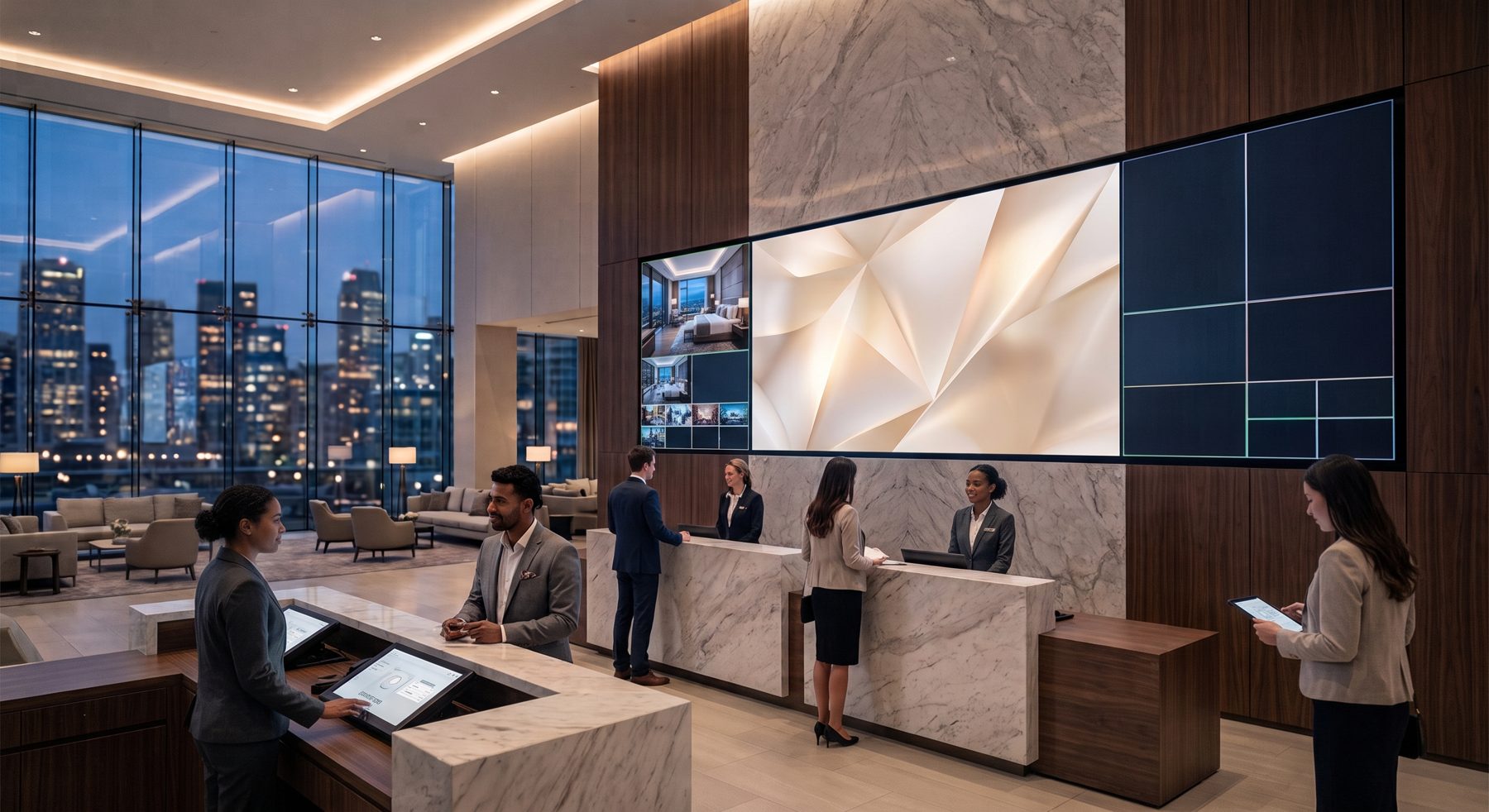
You need a different system for a reception video wall, which displays information and branding content, than for a conference room, where you also need to present, video conference, and amplify sound. It is worth going through the spaces by function and describing what happens in each of them on an average day – this will reveal the actual equipment requirements.
Who will handle it?
This is the most important question, yet it is often left out. If the system is operated by the receptionist or a room-rental guest, simple control with a few buttons is needed, not a professional mixing console. A usable solution is often a wall panel or a tablet interface with a few preset scenes.
What sources should be accepted?
Signals can come from a variety of sources, ranging from guest laptops to media players and video conferencing systems. It is important to clarify how many inputs are needed, whether wireless screen sharing is required, and what connectors are expected on-site. Signal paths and cabling layouts are difficult to modify later, so these must be finalized during the planning phase.
How does it fit into the building?
The location of the displays, the hidden cable routes, the power supply points, and the location of the rack cabinet are also architectural questions. If the installation is done at the same time as a renovation, it is a much cheaper solution than retrofitting. Furthermore, the integration with the evacuation or fire alarm sound system must in all cases be solved based on the given building's execution plans and the relevant regulations.
What happens after the handover?
After commissioning comes training, and it is also worth documenting typical daily operations—this way, staff turnover will not take the system's knowledge away. If you are planning to build an AV system, write to us, and we will discuss what fits the venue.